

A revenue quality assessment tests whether your reported revenue is recurring, collectible, and profitable to deliver, and it separates sustainable earning power from one-time gains. Owners preparing to sell, buyers, and investors should run an internal checklist first, then commission a formal quality of earnings (QoE) report before any transaction reaches serious diligence.
TL;DR:
- Reconcile reported revenue with cash receipts, deferred revenue, and contract assets; investigate receivables that grow faster than sales, a key warning of weak collections.
- Break revenue down by customer and contract, then track recurring sales, churn, concentration, gross margin, days sales outstanding, renewal terms, and rebates across several periods.
- Before formal diligence, reconcile records, remove nonrecurring gains and projects, sample contracts for unusual terms, and quantify adjustments by dollar impact.
- Commission a formal quality of earnings report for a sale, acquisition, major financing, or lender review; sellers prepare numbers, while buyers seek independent verification.
Table of Contents
- What does a revenue quality assessment cover, and why does it matter?
- Which indicators show whether revenue is reliable?
- How do you run an internal revenue quality check?
- What pitfalls and red flags distort revenue quality?
- When should you commission a formal QoE report?
- Why we believe systems matter more than adjustments
- How we help you diagnose and fix revenue quality
- FAQ
- Sources
What does a revenue quality assessment cover, and why does it matter?
An audit asks whether your financial statements follow accounting rules. A revenue quality assessment asks a harder question: will this revenue keep showing up, and will it turn into cash? A quality-of-earnings report separates recurring from nonrecurring items and strips out one-time gains so the business’s true earning power becomes visible.
We treat the work as a proof path that runs from contracts to cash to delivery economics. Headline growth means little if it rests on a few customers, steep concessions, or loosened payment terms.
The decisions it supports are practical:
- Valuation support: Clean, documented revenue gives a buyer fewer reasons to discount your price.
- Faster diligence: When you have already answered the obvious questions, the buyer’s team spends less time hunting for problems.
- Negotiation leverage: Knowing your own weak spots first lets you present them on your terms.
- Operational improvement: The same findings point to pricing, contract, and customer fixes that raise profit before any deal.
Which indicators show whether revenue is reliable?
Start with a short list of signals that reveal the most with the least effort. No single metric settles the question, and a good number in one place can hide a problem that only appears once you break the data down to the customer or contract level.
- Recurring versus nonrecurring revenue: Track what repeats each period and what came from one-off projects, along with churn on the recurring base.
- Customer concentration: Measure the share of revenue from your top customers and review revenue by cohort. Our guide to customer concentration risk explains how to measure it and protect value.
- Gross margin trends: Falling margins on growing revenue often signal rising cost-to-serve or discounting.
- Receivables and DSO: Days Sales Outstanding (the average days it takes to collect after a sale) should stay stable. Receivables growing faster than revenue, period after period, usually means payment terms have loosened and reported sales may not convert to cash.
- Contract terms: Look at renewal cadence, auto-renewals, notice periods, and performance obligations.
- Variable consideration: Rebates, bonuses, and penalties change the amount you can recognize, so they belong in the review.
Revenue is only as good as the cash and contracts behind it. The Topic 606 revenue recognition guidance requires disclosure of disaggregated revenue, contract balances, performance obligations, and significant judgments, which is the same detail a buyer will ask you to produce.
If your reporting makes these cuts hard to pull, using data for growth insights is a useful place to start building the habit.
How do you run an internal revenue quality check?
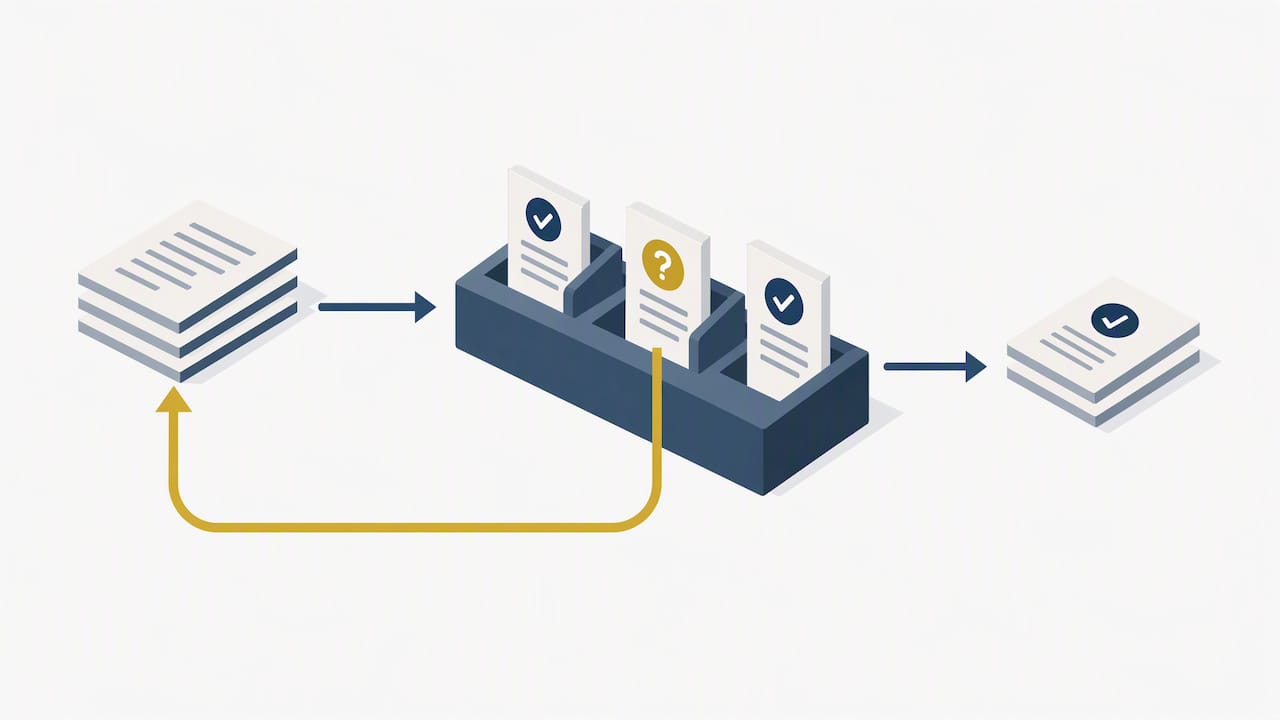
You can surface most issues in a few weeks with your own finance team. Work through these steps in order:
- Assemble the documents: Customer revenue by contract, signed contracts, invoices, AR aging, credit memos, and pricing schedules.
- Reconcile revenue to cash and contract balances: Tie reported revenue to actual receipts and to deferred revenue or contract asset balances. Gaps need an explanation.
- Normalize nonrecurring items: Remove one-time projects, unusual gains, and owner-specific entries so the run-rate is visible.
- Calculate the trend metrics: Compute concentration, churn, renewal rates, and DSO across several periods, and flag anything that moves sharply.
- Sample contracts: Read a cross-section for variable consideration, unusual terms, and how performance obligations are defined.
- Write a short internal memo: Quantify each adjustment and rank the top risks by dollar impact.
Pro Tip: Disaggregate to the customer level before you trust any total. A healthy overall number often hides one account that is quietly shrinking or one contract that is recognized too early.
Treat the process as iterative. Your first pass will raise questions that send you back to the data, and that is the point. If you want a quick benchmark of where you stand before investing more time, our Growth Readiness Score Card gives a structured starting view.
What pitfalls and red flags distort revenue quality?
The most damaging problems are rarely fraud. They are timing and policy choices that make a period look better than the underlying business. Revenue recognition policy shifts are a common, non-obvious culprit, so always reconcile reported revenue against cash receipts to catch timing differences that an accounting change can create.
Watch for these signals:
- Policy or timing changes: Recognizing revenue upfront that was once spread over the term, or contract modifications that pull sales forward.
- Receivables outrunning revenue: The strongest single warning sign that sales are not converting to cash.
- Large one-offs and channel-stuffing: Spikes at period end, heavy discounting, or a rising pile of credit notes.
- Cash and revenue mismatches: Revenue booked long before money arrives, with no clear contractual reason.
- Weak application of the five steps: Topic 606 asks you to identify the contract, identify performance obligations, determine the transaction price, allocate it to those obligations, and recognize revenue as each is satisfied. A breakdown at any step is a finding.
When you spot one of these, trace it back to the contract. The explanation is usually there, and if it is not, a buyer will find the gap.
When should you commission a formal QoE report?
Run the internal check first. Commission a formal QoE when the stakes justify independent verification. Common trigger events include:
- A planned sale of the business.
- Buy-side diligence on an acquisition target.
- A large financing round or lender review.
- A strategic M&A decision that depends on the target’s true earnings.
A typical engagement covers adjustments for nonrecurring items, a forensic review of receivables, revenue decomposition, and contract testing. Timeline and cost depend mainly on company size, the number of revenue streams, and how complex your contracts are, so industry-specific arrangements usually take longer. We will not quote a price here, because scope drives it.
Sell-side and buy-side reports cover similar ground but differ in emphasis. Sellers use sell-side reports to pre-cleanse the numbers and control the narrative, while buyers prefer independent verification and may add their own forensic testing. For help deciding which route fits, read our piece on the role of business assessments in growth.
Why we believe systems matter more than adjustments
Most revenue quality problems are not accounting problems. They are operating problems that show up in the numbers. When pricing lives in one person’s head, contracts vary by customer, and nobody tracks which accounts earn their keep, revenue becomes unpredictable no matter how carefully you report it. Documented playbooks, standard contract terms, pricing discipline, and customer profitability tracking make revenue repeatable, which is exactly what a buyer pays a premium for. Adjusting the numbers at exit is the expensive way to learn this.
— Andre
How we help you diagnose and fix revenue quality
We built our diagnostics to follow the same proof path as the checklist above, so you can move from finding a problem to fixing it without changing partners.

- ProfitDriver Analysis™: A diagnostic that maps directly to revenue-quality checks and produces prioritized fixes for margins and cost-to-serve.
- Enterprise Assessment: A full review of the operations behind your revenue, aimed at reducing concentration and stabilizing contract economics.
- AOS Value Creation Partnership: The documented systems that replace owner dependency and make revenue more predictable ahead of an exit.
Each one targets cleaner contract economics and steadier margins. Schedule your strategy call and we will show you where your revenue is strongest and where it needs work.
FAQ
How much is a business worth with $1,000,000 in sales?
Sales alone do not set a value. Buyers price earnings, so a business with significant sales is worth more when that revenue is recurring, diversified across customers, and profitable to deliver. Industry and margins shift the multiple widely, so a revenue quality assessment is the best way to support a defensible number.
Is a 20% EBITDA margin good?
It is generally considered healthy, but context decides. What matters is whether those earnings are sustainable, which is why a quality-of-earnings review strips out one-time gains and accounting anomalies before anyone relies on the margin.
What are the five criteria for revenue recognition?
Under Topic 606, you identify the contract, identify performance obligations, determine the transaction price, allocate that price to the obligations, and recognize revenue when each obligation is satisfied.
What does a quality of earnings report typically cost?
Cost depends on company size, revenue complexity, and the number of contracts tested, so no single figure applies. Ask any provider for a scoped quote based on your revenue streams and the timeline your transaction requires.
Sources
- Revenue from Contracts with Customers (Topic 606)
- Quality of Earnings Report – Definition, Importance