

Run a three-phase rollout: prepare, manage, and sustain. Start with a readiness assessment, keep executive sponsorship visible throughout, enable people managers directly, deliver role-based training, and track adoption metrics from day one. Below you will find a 90-day roadmap, a readiness checklist, and the pitfalls that derail most rollouts before they reach sustainment.
TL;DR:
- Conduct a thorough readiness assessment to identify capacity, sponsor alignment, and stakeholder engagement issues before committing to go-live.
- Ensure executive sponsors actively communicate and visibly support the change throughout all phases to prevent adoption failure due to weak sponsorship.
- Deploy role-based training close to launch, complemented by a network of change agents and a clear escalation path to address frontline issues promptly.
- Track adoption metrics and business outcomes continuously, and re-evaluate readiness at 30, 60, and 90 days post-launch to prevent erosion of initial gains.
- Transfer ownership explicitly from the project team to business managers with defined metrics and refreshers to sustain adoption beyond the initial rollout period.
Table of Contents
- Mapping the Three Phases of a Change Management Rollout
- Preparing Before Launch: Readiness, Sponsors, and Scope
- Managing the Rollout: Communications, Training, and Go-Live
- Sustaining the Change After Go-Live
- Building a Readiness Assessment You Can Actually Use
- A 30/60/90 Rollout Roadmap You Can Adapt
- Why Rollouts Fail and How to Fix It Fast
- How we apply this through our business operating system
- The Overrated Part of Change Management and What Actually Matters
- Get a Structured Read on Your Organization’s Readiness
- FAQ
- Sources
Mapping the Three Phases of a Change Management Rollout
A rollout succeeds or fails based on how well the technical plan matches the human one. Most project plans map milestones like system cutover, policy changes, or process redesign, but they skip the adoption curve that determines whether people actually use what was built. The three-phase structure, prepare, manage, and sustain, forces both tracks onto the same calendar.
The prepare phase is diagnostic. You assess readiness, align sponsors, and build your plans before anyone outside the project team hears about the change. Deliverables here include a sponsor activation plan, a stakeholder map, and a baseline readiness score.
The manage phase is execution. Communications go out, training happens, and the change goes live. This phase produces a communications plan, training modules, a change agent roster, and a hypercare support model.
The sustain phase locks in the gains. Without it, adoption decays within months as old habits creep back. This phase produces adoption dashboards, manager scorecards, and a documented ownership handover.
Why the alignment matters: a technically flawless system launch with no sponsor visibility or manager coaching tends to produce a textbook case of adoption failure, not a technology failure. University-published guidance, including the UC Berkeley change management toolkit, recommends choosing a rollout strategy, pilot, big bang, or phased big bang, deliberately rather than by default, and building stakeholder workshops and training templates around that choice.
Typical artifacts by phase:
- Prepare: readiness assessment results, sponsor activation plan, governance charter.
- Manage: audience-specific communications plan, role-based training curriculum, change agent network roster.
- Sustain: adoption and outcome dashboard, manager scorecards, ownership transfer document.
A business transformation framework can help you connect these artifacts to the strategic outcomes leadership actually cares about, rather than treating the rollout as an isolated project.
Preparing Before Launch: Readiness, Sponsors, and Scope
Everything that happens during rollout depends on decisions made before go-live. Skipping this phase is the single most common reason timelines slip mid-rollout.
- Run a change readiness assessment. Measure awareness of the upcoming change, sponsor alignment, manager readiness, workforce capacity, and tool or process gaps. According to AIHR’s guidance on readiness assessments, this step surfaces resistance points, skill gaps, and engagement risks, and it works best when done before launch rather than after problems appear.
- Set success metrics and acceptance criteria. Decide in advance what “adopted” looks like: usage rates, process compliance, or output quality, so you are not debating definitions after go-live.
- Assemble the change team and governance structure. Name a steering sponsor, a project lead, and a change lead, and define who approves scope changes versus who simply gets informed.
- Run a capacity check. Map every other initiative competing for the same managers’ and employees’ attention. If three other rollouts are already in flight, that is a gating issue, not a footnote.
Readiness data is only useful when leadership acts on it. If the assessment flags weak sponsor alignment, fix that before locking a go-live date, not after training has already started.
Pro Tip: Publish readiness assessment results directly to the sponsor group rather than burying them in a project status deck. Transparent scores create pressure to act on the gaps they reveal.
A readiness assessment is different from an impact assessment. The impact assessment tells you what is changing and who is affected. The readiness assessment tells you whether the organization has the capability and mindset to absorb it. Both matter, but conflating them is a common planning mistake that leaves teams surprised by resistance they should have anticipated.
For leaders weighing whether to build this diagnostic internally or get a structured read on operational readiness before committing resources, a Growth Readiness Score Card offers one way to benchmark where gaps exist before a rollout begins.
Managing the Rollout: Communications, Training, and Go-Live
Execution is where most of the visible work happens, and where most of the credibility is won or lost. Four activities carry the weight: communications, training, the change agent network, and go-live operations.
Communications need to answer “what’s in it for me” for each audience, not just announce the change. A single company-wide email rarely moves behavior. Frontline staff, middle managers, and executives each need different framing, delivered by the sender they trust most, whether that is their direct manager, a senior executive, or a peer change agent.
Training should be role-based and close to go-live, not generic and early. Training delivered two months before go-live is mostly forgotten by the time people need it. Hands-on practice scheduled in the final weeks before launch, built around the actual tasks each role will perform, retains far better.
A change agent network extends your reach beyond the core project team. These are respected peers embedded in business units who answer day-to-day questions, model the new behavior, and flag resistance early. Pairing this network with a regular manager coaching cadence, where managers get short briefings and talking points before each milestone, keeps the message consistent across the organization. Field service and operations research on decentralizing decision-making makes a similar point: frontline engagement scales change far more effectively than top-down mandates alone.
- Identify change agents by influence, not just title, and give them real information before the rest of the organization gets it.
- Build a manager talking-points cadence tied to each rollout milestone, not a one-time kickoff memo.
- Schedule hands-on training within two to three weeks of go-live, not months in advance.
- Create a visible escalation path so frontline issues reach the project team within hours, not weeks.
Coordination with the project team matters as much as the people-side work. A cutover checklist, a documented contingency plan for rollback scenarios, and a hypercare support model, extra help-desk capacity for the first two to four weeks after launch, keep small issues from becoming adoption-killing incidents.
The data on sponsorship effectiveness is stark. Projects report a 79% success rate when executive sponsorship is rated extremely effective, compared with 27% when sponsorship is extremely ineffective, according to Prosci’s change management principles. That gap is larger than almost any other single lever available during a rollout, which is why sponsor visibility cannot be delegated away once go-live begins.
Projects that use structured change management are also six times more likely to meet their objectives than those that do not, per the same Prosci research, reinforcing that the manage phase is not a side process running parallel to the project, it is the mechanism that determines whether the project’s output gets used at all.
For managers specifically, a 30/60/90 coaching cadence built for mid-market teams gives a concrete structure for what managers should be reinforcing at each stage of a rollout, not just at onboarding.
Sustaining the Change After Go-Live
Go-live is the midpoint of a rollout, not the finish line. Adoption that looks strong in week one commonly erodes by month three if nothing reinforces it.
Pick three to six metrics that combine adoption behavior (login rates, process compliance, task completion) with business outcomes (cycle time, error rate, revenue per unit), and set explicit target thresholds rather than tracking numbers without a benchmark. Reinforce the target behaviors through visible recognition, public dashboards, and manager scorecards that make adoption part of normal performance conversations rather than a separate initiative.
Repeat lightweight readiness checks at 30, 60, and 90 days post-launch rather than assuming the original assessment still holds. Conditions change: new hires arrive without context, competing priorities emerge, and early champions move on. Research on normalization process theory found that mechanisms like coherence, shared commitment, and ongoing reflection are modifiable and directly predict whether an intervention sustains over time, with effects tracked over a 16-month implementation window in the Implementation Science research. That finding supports treating sustainment as an active practice, not a passive hope.
Leadership development interventions aimed at building change capability also show durability. LOCI-style leadership interventions produced sustained improvements in adoption climate and leadership behavior tracked up to 20 months after implementation, which argues for treating leadership coaching as a sustainment investment rather than a one-time workshop before launch.
- Set three to six metrics combining adoption behavior and business outcomes, each with a target threshold.
- Reinforce with recognition programs, public dashboards, and manager scorecards tied to performance reviews.
- Rerun lightweight readiness checks at 30, 60, and 90 days to catch drift early.
- Document and transfer ownership from the project team to the business-as-usual owner before closing the project.
A clear ownership transfer, naming who owns the metrics, the training refreshers, and the escalation path after the project team disbands, is what separates a rollout that sustains from one that quietly reverts. Our guidance on governing transformation and linking activities to outcomes covers this handover in more detail for leaders managing multiple concurrent initiatives.
Building a Readiness Assessment You Can Actually Use
Two assessments get confused constantly, and mixing them up wastes time. An impact assessment answers what is changing and who is affected: which roles, which processes, which systems. A readiness assessment answers something different: does the organization have the capability and mindset to absorb that change right now. You need both, but they answer separate questions and should not be combined into one survey.
A short scoring checklist covers five areas:
| Readiness dimension | What to check | Low-score signal |
|---|---|---|
| Awareness | Do employees know the change is coming and why | Confusion or rumors precede official communication |
| Sponsor alignment | Do sponsors agree on scope and message | Conflicting statements from different leaders |
| Manager readiness | Do managers understand their role in the rollout | Managers ask the project team basic questions publicly |
| Capacity | How many other initiatives compete for attention | Teams report burnout or initiative fatigue |
| Tools and process fit | Does the new process fit existing workflows | Workarounds appear during pilot testing |
Score each dimension on a simple scale, then act on the pattern rather than the average. A low capacity score, for example, calls for delaying go-live or reducing concurrent initiatives, not for more training. A low sponsor alignment score calls for a facilitated sponsor session before any communication goes external, per the AIHR readiness assessment guidance, which recommends using results to prioritize targeted interventions rather than treating the assessment as a formality.
Pro Tip: Treat a weak score on any single dimension as a gating issue, not an average to be offset by strong scores elsewhere. One severely unready area can derail a rollout even when everything else looks healthy.
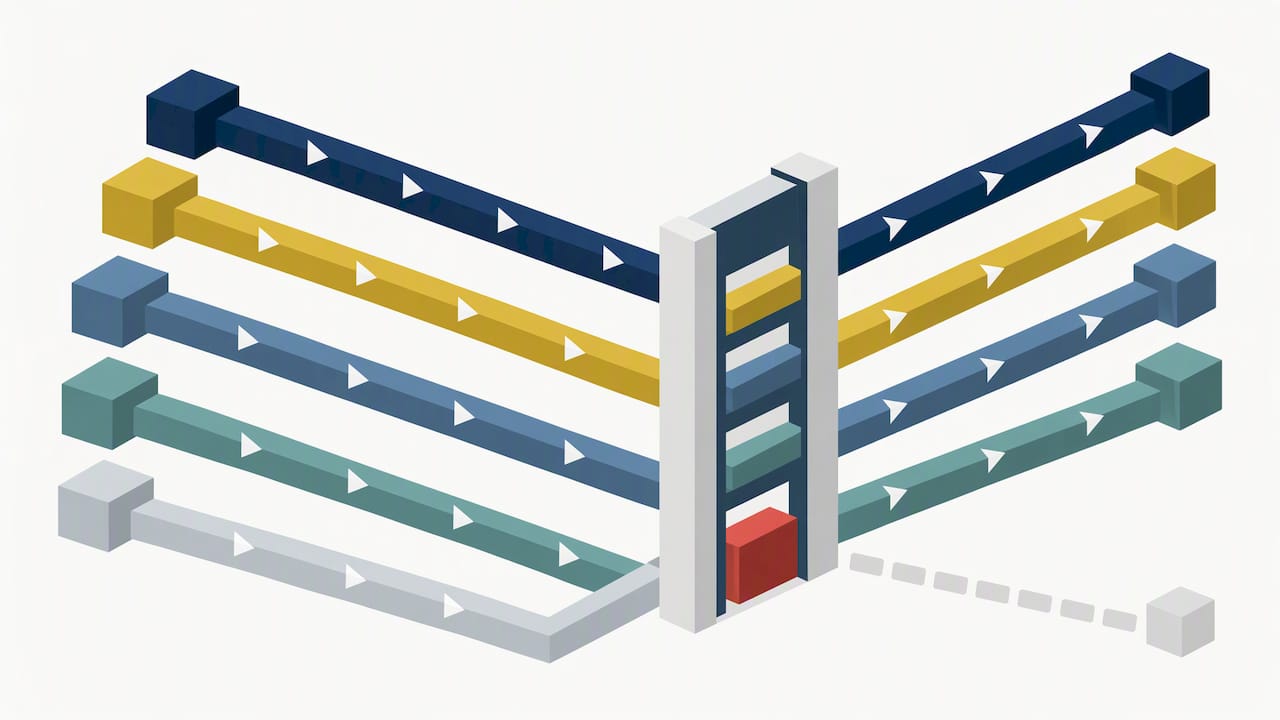
Readiness templates from established toolkits, including the one published by UC Berkeley, give a reusable starting structure rather than requiring you to build a survey instrument from scratch.
A 30/60/90 Rollout Roadmap You Can Adapt
A roadmap is a storytelling artifact for leadership and stakeholders. It is not the detailed project plan your execution team works from day to day, and keeping the two separate prevents leadership from drowning in task-level detail they do not need.
- Days 1 to 30 (Prepare): Complete the readiness assessment, activate sponsors with a short briefing on employee impacts and suggested messages, finalize governance roles, and run the capacity check against other active initiatives. Owner: change lead, with sponsor sign-off.
- Days 31 to 60 (Manage): Launch audience-specific communications, deliver role-based training close to planned go-live, stand up the change agent network, and finalize the cutover and contingency plans. Owner: project lead and change agent network, with manager cadence support.
- Days 61 to 90 (Sustain, early phase): Go live, activate hypercare support, begin tracking adoption metrics daily, and run the first 30-day readiness recheck. Owner: business-as-usual process owner, with project team support tapering off.
Must-have artifacts across the roadmap: a communications plan with audience segments, a role-based training curriculum, a change agent roster, a cutover checklist, a hypercare support model, and an adoption dashboard.
Governance prompts to revisit at each milestone: Has scope grown beyond the original charter? Are managers reporting fatigue or competing priorities? Is the readiness score trending up or down between checkpoints? Any “no” on sponsor alignment or manager bandwidth should escalate to the steering group before the next phase begins, not after problems surface downstream.
Why Rollouts Fail and How to Fix It Fast
Most rollout failures trace back to a small set of repeat causes, and each has a direct fix once you recognize it early.
- Weak or invisible sponsorship: sponsors approve the project but never show up publicly. Fix: require sponsors to deliver at least one visible communication moment per phase, not just sign-off at kickoff.
- Change fatigue from stacked initiatives: employees are absorbing three other changes simultaneously. Fix: run the capacity check before setting a go-live date and delay if the count is too high.
- Overloaded scope creeping past the original charter: “while we’re at it” additions pile on mid-rollout. Fix: route every scope addition through the governance group with an explicit impact-on-timeline statement.
- Manager gaps: frontline managers were never briefed and improvise their own message. Fix: give managers a short talking-points cadence tied to each milestone, not a single kickoff memo.
Leading indicators worth watching weekly: rising help-desk tickets about basic tasks, manager silence in status updates, and readiness scores that flatten or drop between checkpoints.
How we apply this through our business operating system
We built our Accelerated Operating System, AOS, around the same prepare, manage, and sustain logic this playbook describes, applied specifically to mid-market operational transformation rather than a single software rollout. Our Enterprise Assessment functions as the readiness diagnostic. It surfaces capability and mindset gaps before we recommend a specific intervention, which mirrors the readiness-first approach described above.
From there, our documented playbooks replace ad hoc management with repeatable processes, and our AOS Value Creation Partnership extends into sustainment, tying adoption to the operational independence and valuation outcomes mid-market owners are usually working toward.
A rollout plan without a sustainment owner is a project with an expiration date.
For leaders who want a structured, done-for-you path through this process rather than building the governance and templates internally, our Enterprise Assessment and AOS offering is built for exactly that handoff.
The Overrated Part of Change Management and What Actually Matters
Most change management content overweights the communications plan and underweights sponsor behavior and manager capacity. A polished town hall deck does not move adoption if the sponsor who presents it disappears for the next two months.
The conventional advice also tends to treat the readiness assessment as a box-checking exercise rather than a gating decision. If the data says managers are not ready, the fix is not a better slide deck, it is delaying launch or adding manager-specific coaching before go-live. Skipping that step to hit an arbitrary date is the single most common reason sustainment fails within six months.
If you take one thing from this playbook, prioritize sponsor visibility and manager enablement over the sophistication of your communications plan. Everything else, training design, change agent networks, dashboards, works better once those two foundations are solid, and works poorly without them regardless of how well-produced the rest of the rollout looks.
— Andre
Get a Structured Read on Your Organization’s Readiness
If you are weighing whether to run this rollout playbook internally or want a structured diagnostic first, our Enterprise Assessment gives mid-market leaders a clear read on operational readiness before committing resources to a full transformation program.
We start with the diagnostic, not the sales pitch, which means the recommendations that follow are built around what your organization actually needs rather than a generic template. If a phased rollout is part of a larger operational transformation, our Enterprise Assessment and AOS Value Creation Partnership is the next concrete step: book an assessment and see where your organization’s gaps sit before setting a go-live date.
FAQ
What are the 5 phases of change management?
Different frameworks number this differently: some describe three phases (prepare, manage, sustain), while others expand to five steps covering awareness, desire, knowledge, ability, and reinforcement, closer to the ADKAR model referenced in Prosci’s research. Whichever framework you use, the underlying sequence is the same: diagnose readiness, build commitment, execute training and communication, then lock in the behavior change.
What is Lewin’s 3 stage change model?
Lewin’s model describes change as unfreeze, change, and refreeze: first loosening current habits and assumptions, then implementing the new process or behavior, then stabilizing it so it becomes the new normal. It maps closely to the prepare, manage, and sustain structure used throughout this playbook, though Lewin’s original model predates most modern digital-era rollout practices.
What are the 5 C’s of change leadership?
Definitions vary across practitioners, but common versions include communication, commitment, capability, culture, and coordination as the core leadership responsibilities during a rollout. Regardless of the exact framing, sponsor commitment and clear communication consistently show up as the highest-leverage factors in rollout outcomes.
Is change management outdated?
No. Structured change management remains strongly associated with project success: projects using it are six times more likely to meet their objectives, according to Prosci’s change management principles. What has changed is the pace and frequency of rollouts, not the underlying need for readiness assessment, sponsorship, and sustainment planning.
How long should a change management rollout take?
Timelines vary by scope, but a 90-day structure covering prepare, manage, and early sustain activities works for most mid-sized initiatives, with full sustainment tracking extending several months beyond go-live. Readiness checks at 30, 60, and 90 days after launch help confirm whether the pace needs to slow down or whether sustainment is on track.
Sources
- Change management principles (Prosci)
- Leadership and Organizational Change for Implementation (LOCI) intervention (PubMed)
- How To Conduct a Change Readiness Assessment (AIHR)
- Change management toolkit (UC Berkeley)
- Normalization process theory implementation analysis (Implementation Science)
One Response