

Building a repeatable business operating system that actually reduces owner dependency and makes a company appealing to buyers takes more than generic process mapping or off-the-shelf template kits. Many consulting programs either require a fixed term retainer without providing transferable documentation or hide practical exit-readiness methods behind enterprise-level engagements that smaller mid market firms cannot access. This comparison details coaching structure, documentation rigor, and integration options across four operating system consulting alternatives so you can pick the approach that best fits your leadership resources and exit horizon.
Table of Contents
- AOS (Accelerated Operating System) for Business Scaling and Exit Readiness
- ClauseBase
- Kronicle
- Lawgood
- Comparative Analysis
AOS (Accelerated Operating System) for Business Scaling and Exit Readiness
At a Glance
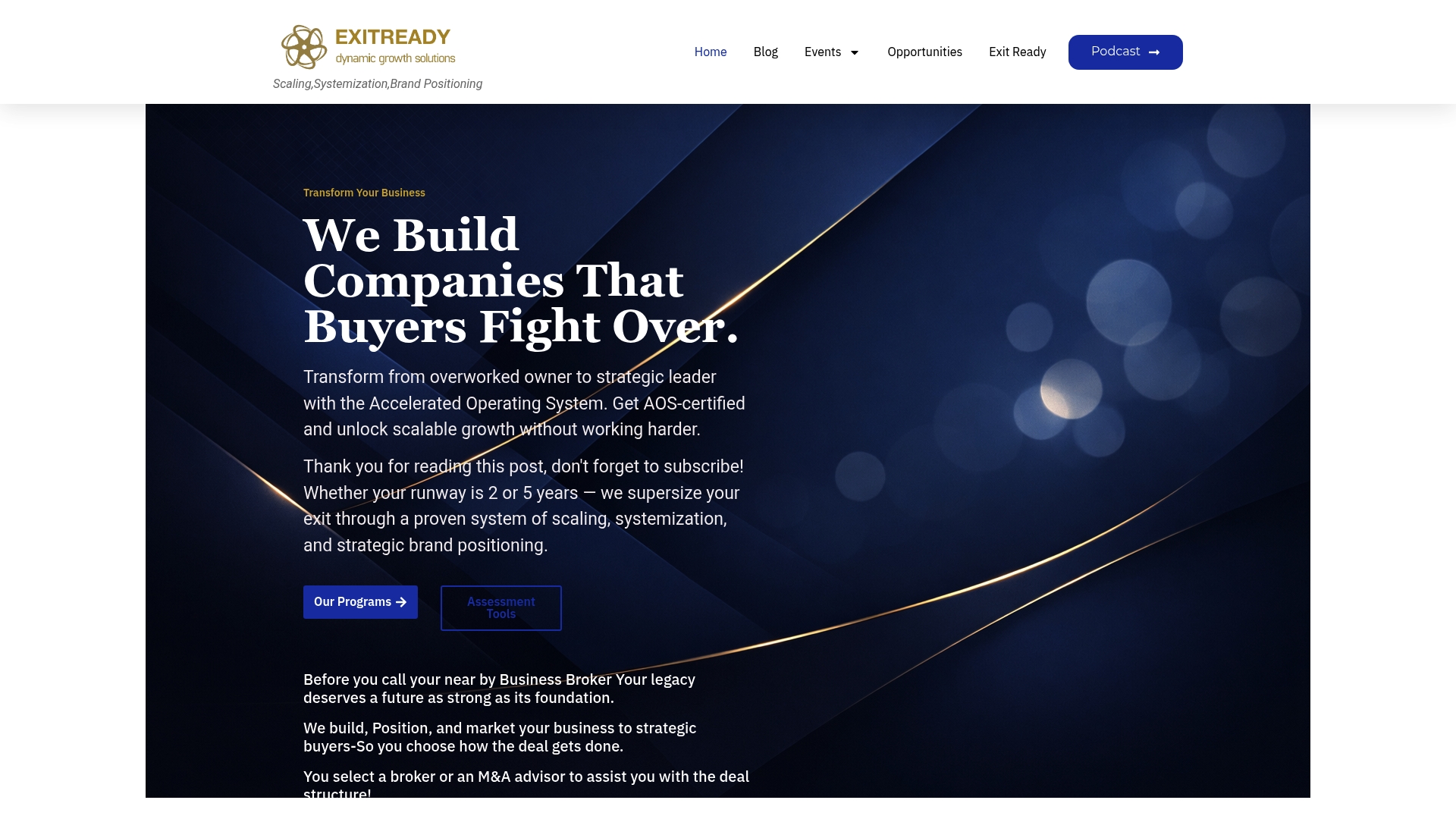
The vendor states the program runs on a structured eight step certification and typically requires a significant leadership time commitment over 3 to 12 months. AOS targets mid market owners who want to make their companies transferable and more attractive to buyers.
Core Features
- Structured 8-step certification process that documents systems and validates transferability.
- Documentation and playbooks for core operations to reduce owner dependency and build management depth.
- Strategy alignment modules for goal setting and measurable enterprise value improvements.
- Operational independence development and leadership coaching to create scalable management layers.
- Access to a curated buyer network and marketing systems to support a sale or ownership transfer.
Key Differentiator
AOS adapts Fortune 500 methodologies into a repeatable certification workflow that frames operational improvements as sellable assets. That merging of corporate practices with a certification path turns internal process work into evidence a buyer can evaluate during diligence.
Pros
- The certification gives third party structure to process work. That external framing makes improvements easier to present in a sale process.
- Emphasis on documented playbooks reduces owner dependency faster than ad hoc process projects.
- Access to advisors and a buyer network shortens the path from readiness to market exposure.
- The program ties operational fixes to valuation levers such as financial cleanup and leadership depth, not just checklist completion.
- Customization options allow industry specific adjustments so the methods feel applicable to manufacturing, services, and product companies.
Cons
- The program requires sustained owner and leadership commitment for the time frame above, which can be a heavy lift for founders who run day to day operations alone.
Who It’s For
Mid market business owners and CEOs who plan to scale or sell within a three to five year horizon and who are willing to invest time in documenting processes and building management depth. The typical candidate wants reduced owner workload and higher enterprise value.
Unique Value Proposition
Access to a curated buyer network plus a formal exit certification creates observable credibility in negotiations. Instead of describing improvements verbally, certified processes become traceable evidence that buyers and advisors can evaluate quickly.
That credibility shortens diligence timelines and can improve offer quality for owners who complete the program and the accompanying documentation work.
Real World Use Case
A manufacturing owner used AOS to document production, quality checks, and vendor onboarding. Management depth improved through role definitions and training. After certification the owner negotiated a sale with multiple bidders and achieved a higher valuation than previous offers.
Pricing
Pricing is custom and disclosed during the certification application or by request. The vendor notes that costs vary with customization and certification scope, so expect a consultative pricing process rather than fixed public tiers.
Website: https://dynamicgrowthsolutions.com
ClauseBase
At a Glance
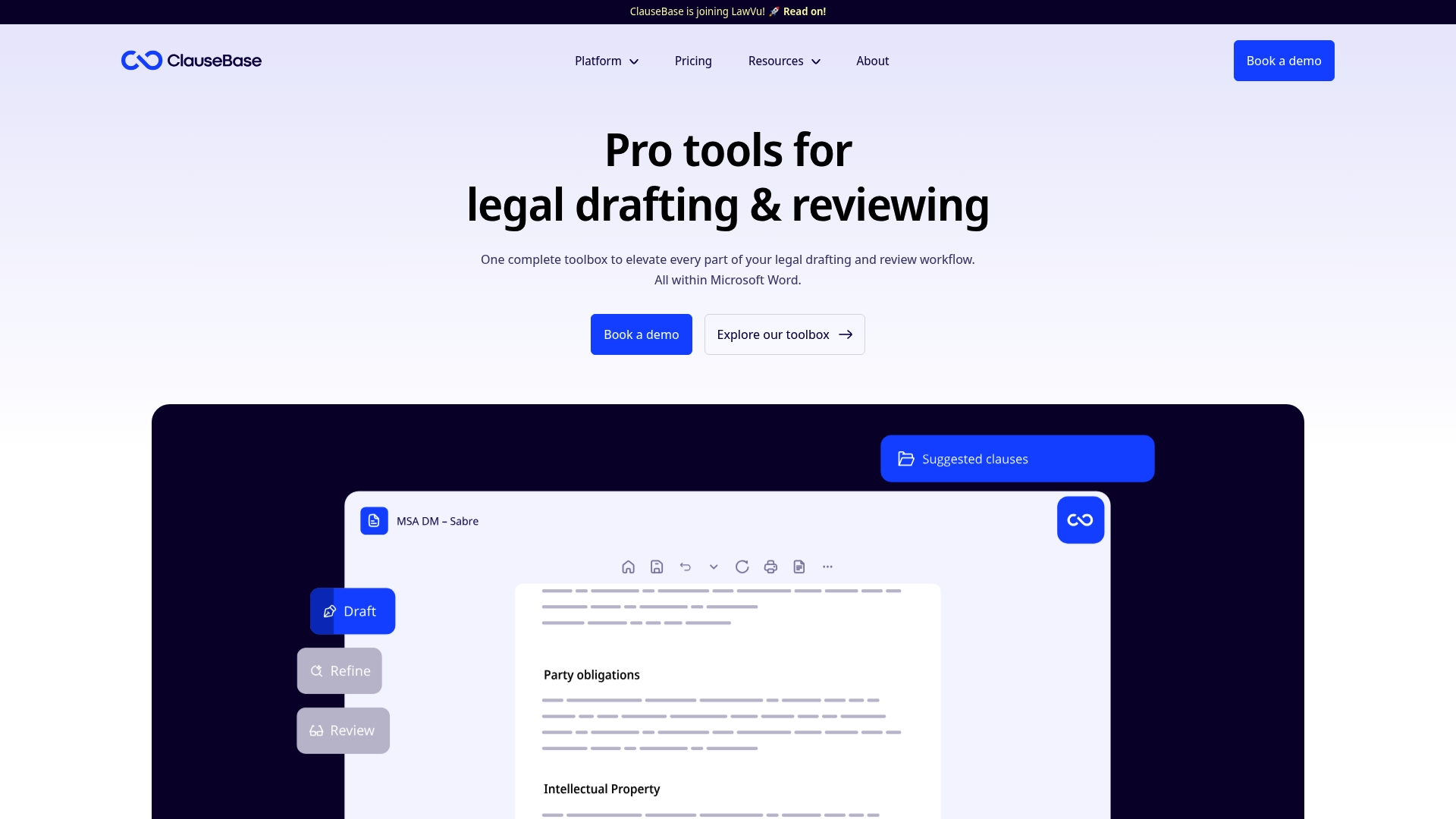
ClauseBase embeds its drafting toolbox directly in Microsoft Word and Outlook so you work inside familiar editors rather than switch to a separate app. The vendor notes limited independent user reviews at this time, which makes direct comparisons harder for buyers doing reference checks.
Core Features
ClauseBase combines clause management, template assembly, and AI-assisted review in a single suite. Its toolkit centers on drafting inside Word and Outlook with automated styling and clause insertion.
- Clause library and precedent extraction for reusing negotiated language.
- Automated contract assembly with styling rules and clause logic.
- AI-assisted review and proofreading plus a clause finder for fast analysis.
- API support including REST and GraphQL and embedded scripting for LLM exports.
Key Differentiator
What sets ClauseBase apart is that it merges three drafting paradigms clause based, template based, and AI assisted into one product built by practitioners. That approach lets legal teams translate lawyer workflows into reusable building blocks while keeping output inside Word and Outlook.
Pros
- Rich drafting toolkit that covers authoring, automated assembly, and AI review in one place which reduces context switching for reviewers.
- Built by lawyers so the product reflects common drafting patterns and practical controls rather than abstract feature lists.
- Multi lingual support and a documented compliance focus help teams that work across jurisdictions.
- Flexible integration options with legal systems let legal operations connect document libraries to matter management.
- Strong developer surface with REST and GraphQL APIs and scripting for custom exports to LLMs or downstream systems.
Cons
- Independent user feedback is sparse which makes it harder to verify long term stability or adoption patterns.
- Pricing is not published which requires contact with sales and can slow procurement cycles for mid market buyers.
- The breadth of capabilities creates a learning curve for teams that only need simple templates.
When It May Not Fit
Small firms or solo practitioners who only draft a handful of straightforward documents will likely find the full ClauseBase suite more complex than necessary. Teams that need public pricing to align budgets will face extra procurement friction. If you need a tiny lightweight clause picker, this is heavier than required.
Notable Integrations
ClauseBase lists connectors to popular legal platforms and data sources that matter to legal ops.
- iManage
- LawVu
- Corporify
- Google Maps
- Contractify
Who It’s For
Legal departments, law firms, and corporate counsel that require advanced document automation and tight control over precedent language. It suits teams that want to keep drafting and review inside Microsoft Word and Outlook while integrating with matter systems.
Real World Use Case
A corporate legal team replaces manual assembly steps by building a clause library and templates in ClauseBase. Routine NDAs and vendor contracts are generated with company style applied, senior lawyers use the AI review to spot inconsistent clauses, and the team shortens review cycles and reduces drafting errors.
Pricing
Pricing is not publicly disclosed and appears to be custom or enterprise based. Expect vendor engagement and a sizing discussion rather than an off the shelf per user price.
Website: https://clausebase.com
Kronicle
At a Glance
Unified knowledge graphs connect contract, matter, and compliance records inside a single index, exposing relationships lawyers usually recreate by hand. The vendor describes the platform as an enterprise-grade suite that blends AI document management, legal research databases, and encrypted e-signatures.
Core Features
Kronicle brings together contract lifecycle workflows, legal research, and practice management under one roof.
- Encrypted e-signatures for legally binding execution and audit trails.
- AI-driven contract lifecycle tools for drafting, review, and clause extraction.
- Knowledge graphs that link matters, contracts, and compliance obligations for faster discovery.
- Integrated legal research covering judgments, legislation, and contract templates.
Key Differentiator
What sets Kronicle apart is the combination of AI workflows with built-in legal research and secure signing in a single product. That pairing aims to reduce handoffs between research, drafting, and execution teams inside larger legal operations.
Pros
- Consolidates workflows. The platform bundles research, drafting, signing, and matter tracking so teams spend less time moving files between tools.
- Strong security posture. The encrypted signatures and enterprise framing are designed for corporate legal teams handling sensitive agreements.
- AI assistance across stages. Drafting and review tools help extract clauses, tag obligations, and surface relevant precedents from the research database.
- Practice management included. Matter tracking and task management are built in, which helps in-house teams keep legal intake and compliance work visible.
Cons
- No public user reviews. There are no substantive third-party reviews available, which makes real-world reliability hard to judge.
- Enterprise focus may overwhelm small teams. The product appears geared to larger legal departments rather than solo practitioners.
- Pricing not published. The lack of clear pricing limits upfront budgeting and vendor comparison during procurement.
Who It’s For
Legal and compliance teams within mid to large enterprises that need a single system to manage contracts, legal research, and secure execution. Teams with dedicated IT or procurement resources will extract more value than very small practices.
Real World Use Case
A corporate legal department uses Kronicle to automate routine NDAs and vendor agreements, pull precedent language from its internal research corpus, and complete signature and retention steps within the same workflow.
Pricing
The vendor does not publish pricing information. Organizations will need to request a demo or contact sales for licensing and deployment options, which may include enterprise implementation fees.
Website: https://kronicle.in
Lawgood
At a Glance
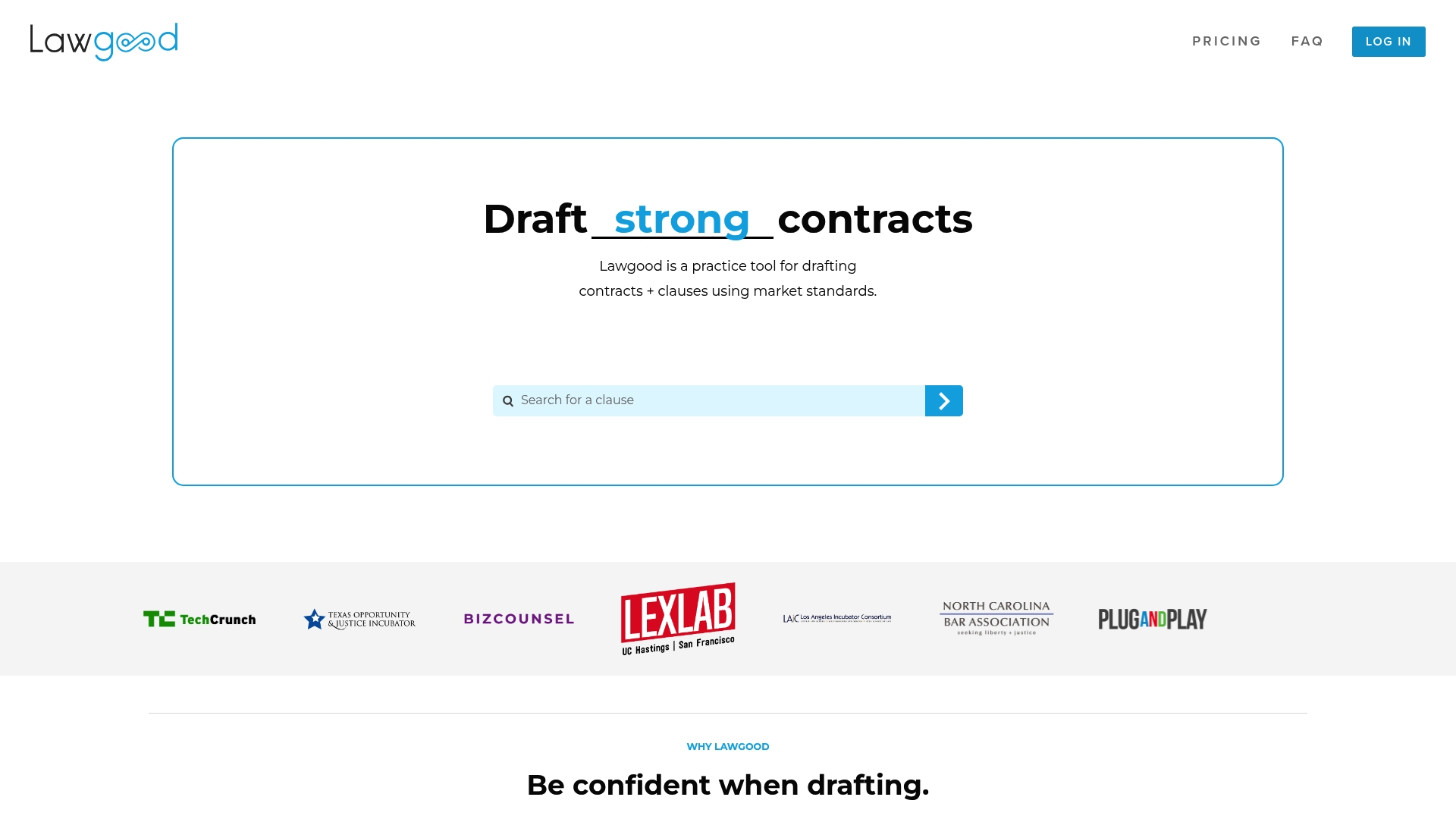
Just $99 per month for full access, with a first month free offer when using a promo code. The vendor reports being trusted by over 300 law firms, a self-reported figure that signals market adoption among legal teams.
Core Features
Lawgood provides a library of pre-vetted contracts and clauses drafted by experienced lawyers and updated regularly. The library pairs those templates with market data so you can see typical ranges and phrasing used in your industry.
The editor focuses on clarity by using plain English and guided clause customization. Subscribers can draft unlimited contracts and clauses in real time during an active subscription, which supports fast iteration during negotiations.
Key Differentiator
Lawgood combines lawyer-vetted language with explicit market benchmarks inside the same drafting interface. That mix makes it easier to pick language that aligns with prevailing practice rather than guessing from a single precedent.
For teams that must defend contract language to internal stakeholders, the presence of market data alongside vetted clauses reduces internal debate and provides a defensible drafting rationale.
Pros
- Reduces drafting and research hours by offering ready-to-use clauses that are editable on the spot, which speeds contract turnaround for busy shops.
- The pairing of vetted text with market signals helps lawyers justify term selections to clients or negotiating counterparts without rebuilding research packets.
- The interface emphasizes plain English, making it usable by non-lawyers such as founders, procurement leads, and paralegals who need clear draft language.
- Regular updates to contract types and clauses keep the library aligned with recent practice, preventing reliance on stale precedents.
- The unlimited drafting model during subscription removes friction when you need several contract drafts in a short timeframe.
Cons
- Pricing is fixed at $99 per month, which may be high for solo practitioners or very small teams who use contract drafting only occasionally.
- Limited external reviews are available; buyer feedback beyond vendor materials is sparse so you will rely largely on the vendor’s claims when evaluating fit.
- The product data lacks detail on offline access and integration capabilities, which matters if you need imports, exports, or local copies for firm systems.
When It May Not Fit
If you require deep integrations with a larger practice management system or legal matter platform, Lawgood may fall short because its integration footprint appears limited. Firms that need built-in time tracking or billing tied to drafting will need additional tooling.
Also, very small teams that draft few contracts quarterly may find the monthly fee harder to justify than a pay-per-document option.
Who It’s For
Lawyers and in-house counsel at small to medium law firms who draft frequently and want defensible, market-aligned language. Business owners and legal operations staff who need clear, editable templates without legalese will also find the product practical.
Real World Use Case
A startup founder uses Lawgood to assemble a tailored service agreement. The founder answers guided questions, applies market-aligned clauses, and produces a client-ready draft in a single afternoon rather than waiting days for outside counsel.
Pricing
Lawgood is priced at $99/month for full access with a promotional first month free when a promo code is used. The model supports unlimited drafting during an active subscription, which favors frequent drafters.
Website: https://lawgood.io
Comparative Analysis
When evaluating business system consulting programs, it’s crucial to understand how specific offerings align with organizational goals such as scalability, transferability, and operational efficiency. Here, we compare four distinct services based on factors that matter to mid-market business owners and legal teams.
Efficiency of Implementation
DynamicGrowthSolutions offers a structured eight-step certification process that emphasizes process documentation and operational independence. This approach ensures that key systems are validated and transferable, which is particularly beneficial for businesses preparing for ownership transitions. In contrast, ClauseBase and Kronicle integrate tools tailored to legal document management and drafting, which presents a narrower focus on specific operational aspects but may simplify collaboration for legal departments.
Accessibility and Cost Transparency
While DynamicGrowthSolutions customizes its pricing based on consultation, which might create delays in budget planning, Lawgood publishes clear pricing tiers, making it more straightforward for small businesses or startups needing predictable costs for legal document drafting and review. This pricing differentiation highlights scenarios where fixed pricing models are advantageous.
Best Fit Scenarios
- DynamicGrowthSolutions: Best for business owners focused on achieving higher enterprise value through operational improvements and preparation for ownership transfer.
- ClauseBase: Beneficial for legal teams that require advanced document automation integrated directly within Microsoft Office tools.
- Lawgood: Suited for small businesses seeking affordable, pre-vetted contract solutions without investing heavily in legal consultations.
- Kronicle: An excellent choice for enterprises needing legal compliance management and integrated document workflows.
Our Pick for Business Objectives
DynamicGrowthSolutions is the recommended choice for mid-market business owners who aim to develop scalable, transferable enterprises within a defined timeline. However, if a business primarily addresses legal documentation challenges or has a limited budget, exploring alternatives like ClauseBase or Lawgood may be more appropriate. Even with its strengths, DynamicGrowthSolutions is best suited for organizations that can allocate extended leadership engagement.
Business Operating System Consulting Comparison
Evaluate leading business operating system consulting providers offering tailored solutions for scaling and transitions. Compare their unique features and suitability for different business needs.
| Provider | Core Feature | Key Differentiator | Target Audience | Pricing | Notable Limitation |
|---|---|---|---|---|---|
| Dynamicgrowthsolutions | Structured 8-step certification process | Adapts corporate methodologies into sellable certification steps | Mid-market business owners planning scale or exit | Not disclosed | Requires active leadership commitment to succeed |
| ClauseBase | Clause management and drafting within Word/Outlook | Merges drafting paradigms for lawyer workflows | Legal departments and firms needing document automation | Not disclosed | Sparse user reviews affecting validation of reliability |
| Kronicle | Unified knowledge graphs for legal workflows | Combines AI drafting, legal research, and secure execution | Enterprise legal and compliance teams | Not disclosed | Better suited for larger teams over small practices |
| Lawgood | Library of pre-vetted contracts with market data | Combines vetted language with market-aligned benchmarks | Small to medium firms drafting frequently | $99/month | Lacks deep integrations for extensive practice management scenarios |
Strengthen Your Business Foundations Beyond Document Management
Choosing the right document management platform is just one piece of the puzzle when preparing your business for scalable growth and future exits. Challenges like reducing owner dependency, documenting core processes, and building leadership depth play a vital role in positioning your company for premium valuation. Dynamicgrowthsolutions offers the Accelerated Operating System (AOS), a proven approach that transforms mid-market businesses through systematic playbooks and certification that make your operations transferable and attractive to buyers.
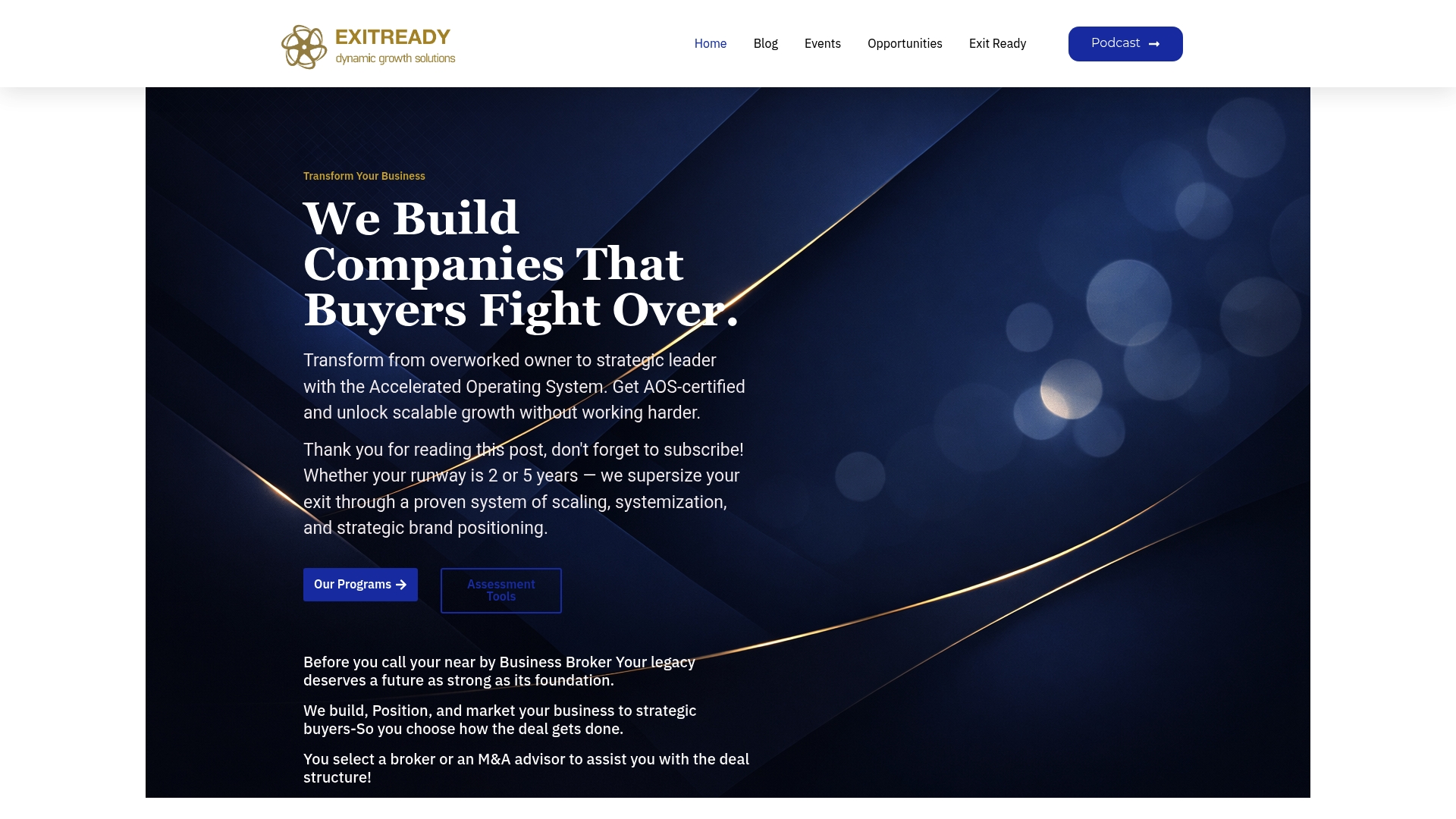
Discover how AOS aligns strategic goals with operational independence at Dynamicgrowthsolutions. Act now to schedule a consultation and receive a tailored assessment that highlights how documented systems will reduce your workload and prepare you for your next growth phase or successful exit.
Frequently Asked Questions
What makes Dynamicgrowthsolutions suitable for businesses looking to scale?
Dynamicgrowthsolutions provides a structured 8-step certification process that documents systems and validates transferability, making it particularly effective for companies aiming to improve enterprise value. This feature allows businesses to showcase their operational improvements as sellable assets, which can attract potential buyers. To benefit from these advantages, consider starting your certification process with Dynamicgrowthsolutions.
How does Dynamicgrowthsolutions compare to other business operating system consultants?
Competitors like ClauseBase offer unique drafting tools integrated with Microsoft Word, which can streamline document management for legal teams. Dynamicgrowthsolutions, however, focuses on operational certifications that enhance the scalability of business processes, making it the better choice for companies preparing for sale or scaling. Depending on your specific needs, evaluate which platform aligns best with your objectives.
What feature does Dynamicgrowthsolutions offer for reducing owner dependency?
Dynamicgrowthsolutions emphasizes documented playbooks for core operations, effectively minimizing owner dependency more quickly than ad hoc processes. This approach allows for the creation of management depth, which is key for businesses looking to transfer ownership. Implementing these playbooks can be a significant step toward increasing your company’s marketability.
Can businesses using Dynamicgrowthsolutions access a buyer network?
Yes, Dynamicgrowthsolutions provides access to a curated buyer network, which supports owners in marketing their company for sale or ownership transfer. This feature is particularly beneficial for businesses that aim to shorten liability timelines and improve offer quality. If you’re looking to engage with prospective buyers, this network could be an essential resource.
What commitment is required to ensure success with Dynamicgrowthsolutions?
The program necessitates a substantial commitment from leadership for a duration of 3 to 12 months, which can be challenging for those who manage daily operations independently. It’s crucial to assess your availability for this commitment before enrolling in the program to maximize its benefits.